
StoryPath
An app that makes monuments speak when you arrive.
Live — visit storypath.pt ↗
Three products, one job: make the town do the talking.
I designed and built three products that work as one: a 3D app for visitors, a dashboard for the town hall, and a map builder that holds it all together. If any of it feels like technology, I got it wrong.
Rich heritage, thin experience.
Walk into any tourist office and you get the same thing: a paper map and a pile of flyers. They tell you where things are, never why they matter. If you don't speak the language, you get even less.
Behind the counter it's worse. The town has no tools to manage any of this, no data on what visitors actually do, and no practical way to build a route and publish it. So tourists spend two hours, take photos, and leave. The local economy barely notices them.
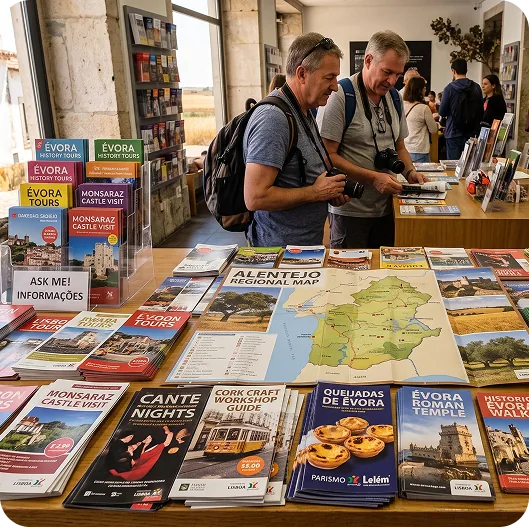
So I built three things.
The App
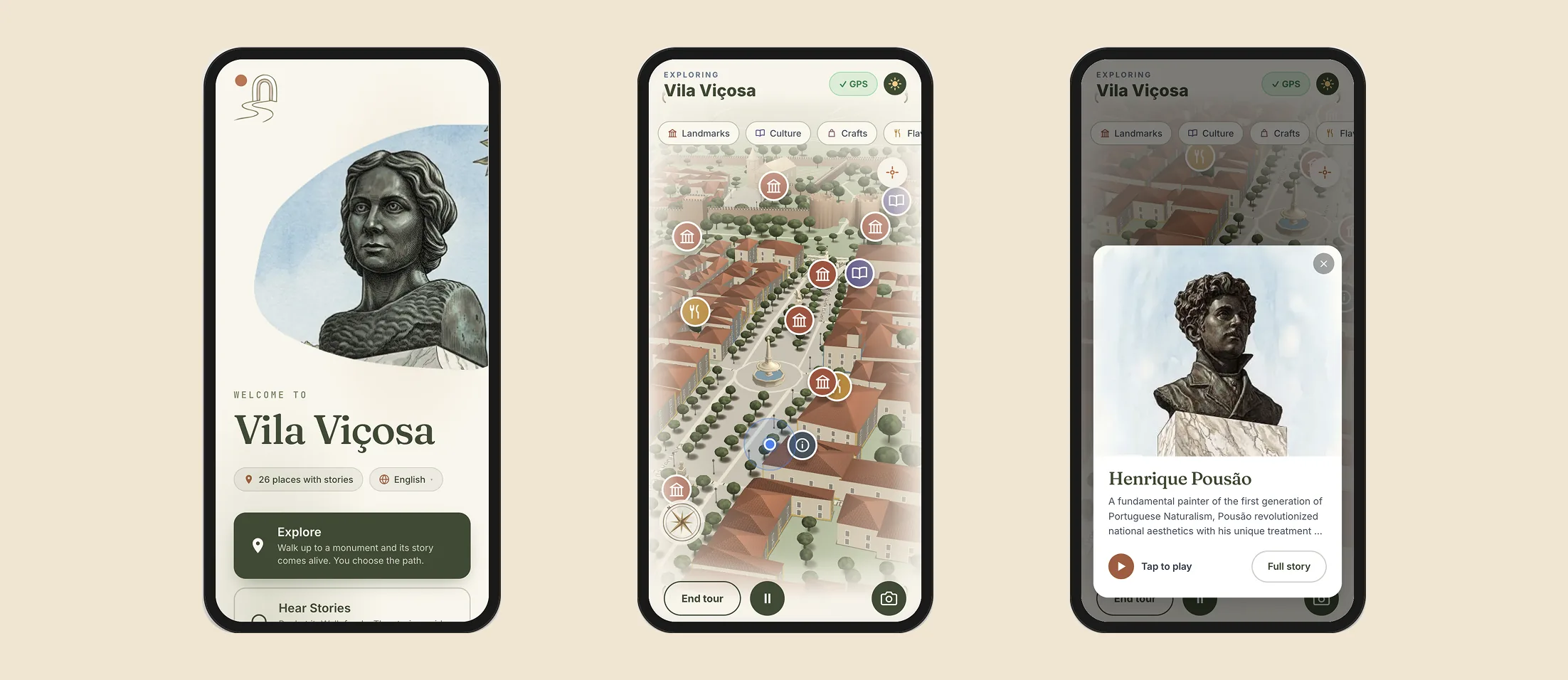
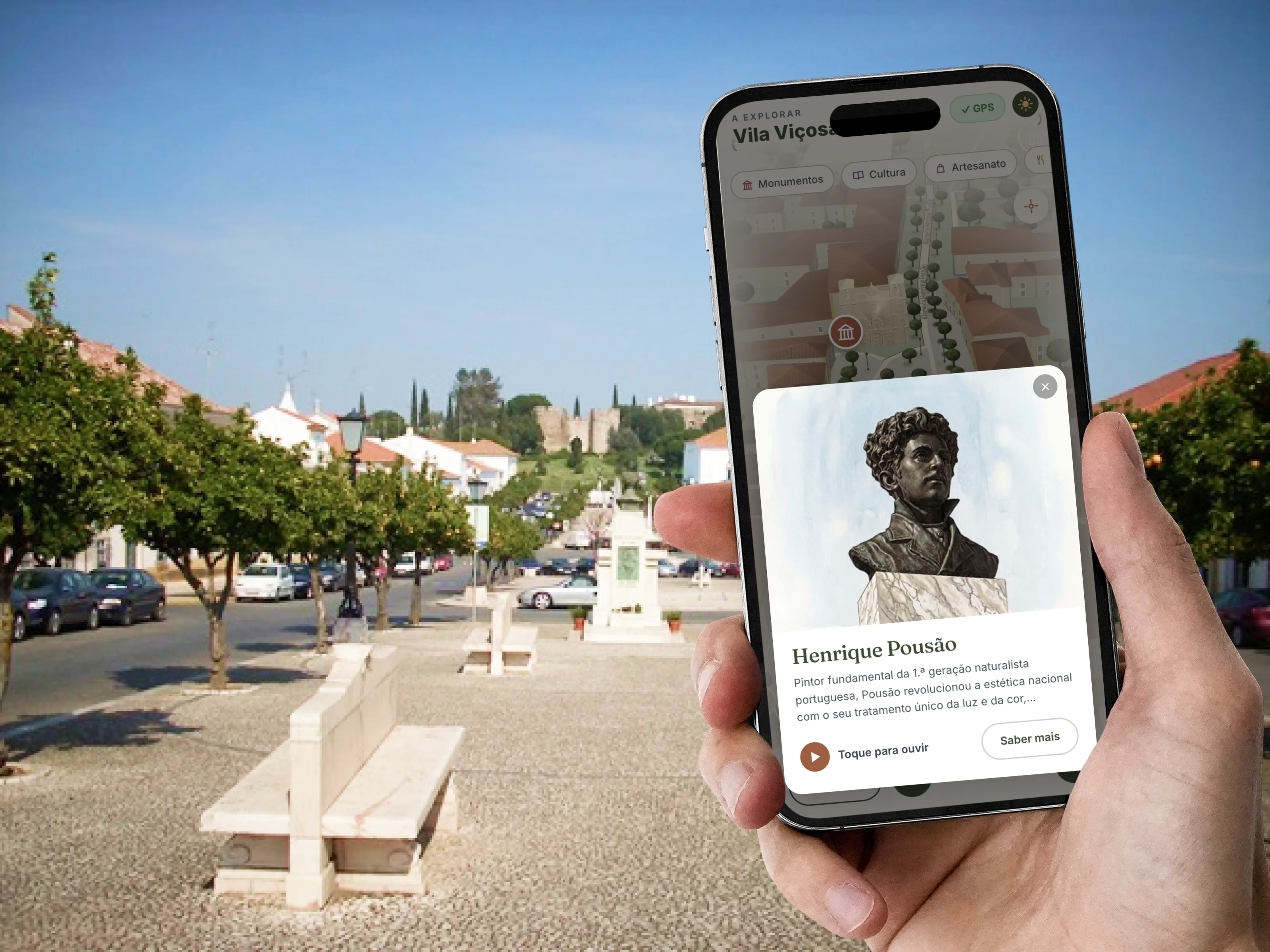
The app does almost nothing, on purpose. There is nothing to install: scan a QR code and you are inside the tour, straight in the browser. You walk; near a monument the phone buzzes and the story starts. No account, no tutorial, no app store.


Map Builder
Standard maps optimise for wayfinding: getting from A to B as fast as possible. Heritage wants the opposite — it wants you to wander. That conflict is why I built the map tool from scratch instead of renting one.
Towns model their streets in 3D, drop monuments, attach stories, draw routes. No code, no map vendor bill, no per-tile licensing — and the town owns the result, editing it as the place changes.
Place a point, attach a story, publish. An admin should never need a manual — or a developer.
Depth invites exploration. Visitors follow visual interest, discovering monuments they never searched for.
No map vendor bill, no lock-in. The municipality's heritage stays the municipality's.
The live 3D map of Vila Viçosa — drag to explore. This is the real product, embedded.
Municipal Dashboard
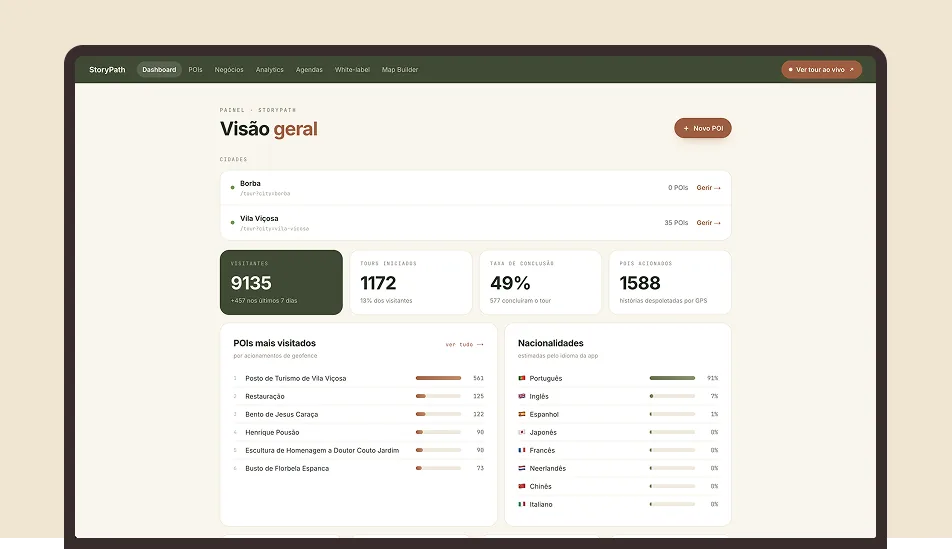
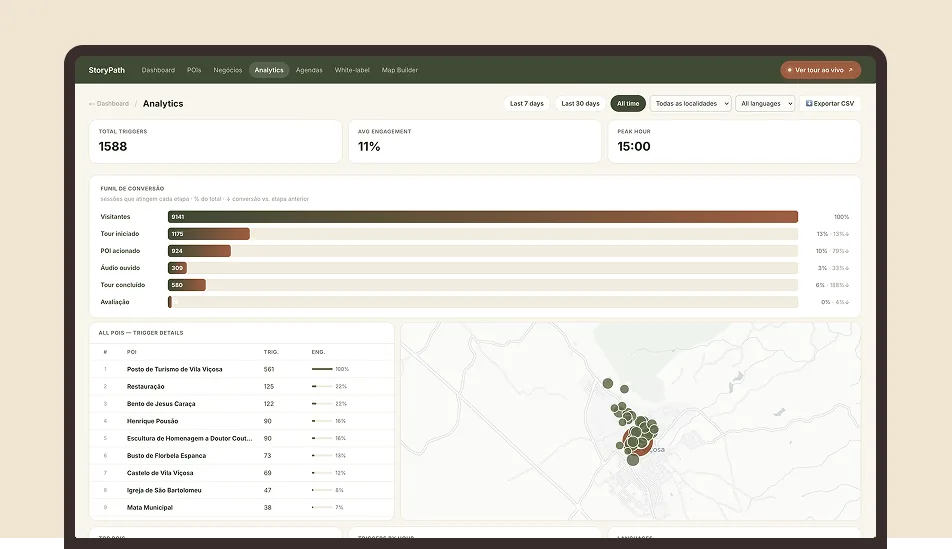
Where the town runs the show: routes, stories, updates, visitor numbers. My test for every screen was simple: if it needs a manual, redo it.
Walk close. The story wakes up.
One QR code at the start, and that is the last time you look for anything. From there, no list to search, no screen to stare at: as you approach a monument, the phone vibrates and its story unlocks. The technology stays in the pocket and the place does the talking.
Each unlock is a small reward that pulls the visitor toward the next one. Exploration becomes the interface: the town, not the app, decides what happens next.
The trigger is arrival. Nothing is asked of the visitor except to walk.
WiFi is unreliable in heritage areas, so the PWA caches everything on entry. After the QR scan, the unlock never depends on a signal.
The hotel's name on the door. StoryPath underneath.
Hotels offer StoryPath to guests under their own brand: their colours, their name, their tone. Underneath, the map and the stories keep flowing from the town's heritage.
The hotel gets something no competitor has, the town gets distribution, the guest gets the stories. Nobody needs to know StoryPath exists.
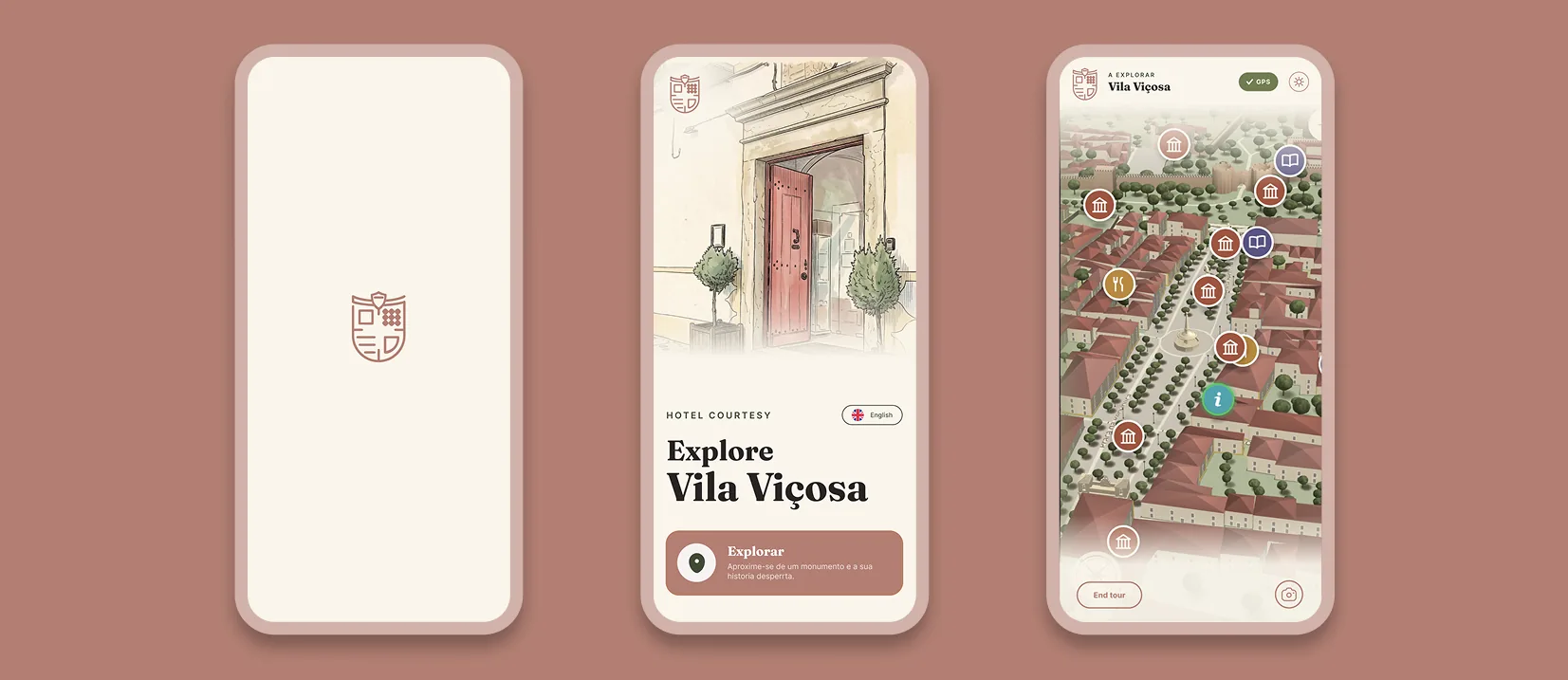
Zero friction. Scan, walk, and let the technology recede so the story can emerge.
The map doesn't optimise for wayfinding — it optimises for desire. Visitors unconsciously follow visual depth, discovering monuments organically.
No flat pins on a map tile. Each landmark exists as an actual 3D model, so recognising it on the map feels like recognising it on the street. This is the fountain from the town square — grab it.
Pilot in Vila Viçosa, live since June 2026.
A four-month pilot: one town, no ad budget. It had to prove one thing — that people would actually use it. The numbers below are live, and roughly one in two tours started gets finished.
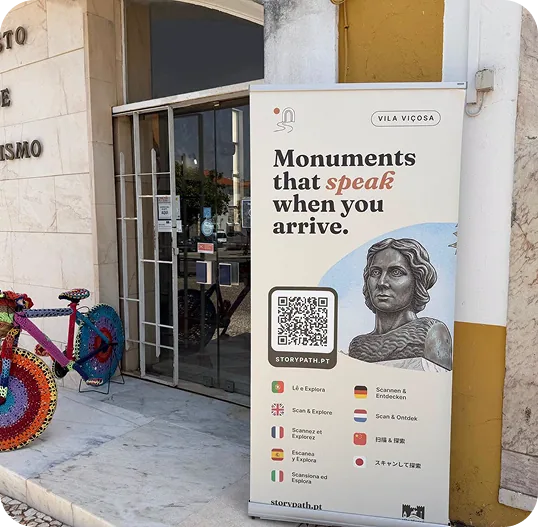
Lessons that shaped the product.
People braced for another complicated app and got almost nothing to learn. That surprise did our marketing for us.
People wandered because the 3D map made them curious, not because a list told them to.
WiFi in a walled medieval town is what you'd expect. Everything works without it.
Three-minute narratives kept people listening with the phone in their pocket. Dates and dimensions never did that.
If the visitor notices the app, I failed.
That rule decided almost everything. It killed features I liked, cut screens I'd already designed, and settled every argument about adding "just one more thing". The visitor gets the town. The admin gets a tool that needs no manual. The hotel gets its own name on it.